
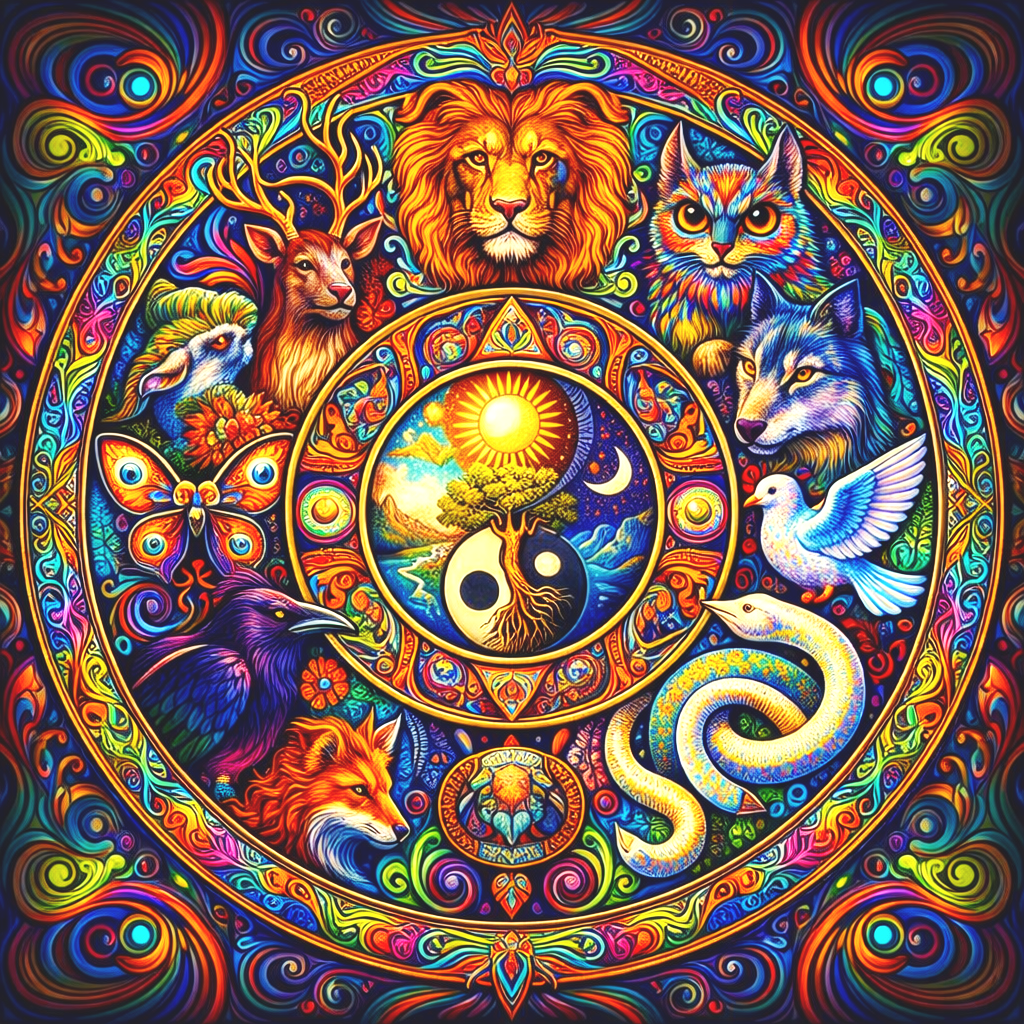
Psychedelic Integration Therapy: Lessons from Ann Shulgin and Depth Psychology
Psychedelic experiences can be powerful, disorienting, and surprisingly tender all at once. People often arrive in my office carrying something they can't quite name—a felt sense that something real happened, something shifted, but the meaning of it keeps slipping away before they can hold it.
I know this territory. As a Jungian-oriented therapist and integration specialist, I've spent years sitting with the kinds of material that psychedelics tend to stir loose: old grief, buried images, the sudden arrival of something that feels like it comes from somewhere older and deeper than ordinary thought. This work isn't abstract to me. It's the center of my practice.
And no thinker has shaped how I hold this work more than Ann Shulgin.
Ann Shulgin: A Pioneer of Psychedelic Psychotherapy
Ann Shulgin was a Jungian-oriented psychotherapist who worked alongside her husband Alexander Shulgin, the chemist who synthesized and catalogued hundreds of psychoactive compounds. Together they authored PiHKAL and TiHKAL—texts that remain foundational in psychedelic literature, and ones I return to.
What has always moved me about Ann's work is that she never got distracted by the pharmacology. While so much of the conversation around psychedelics focuses on mechanisms and molecules, she kept her attention on what matters in any depth therapy: the interior life of the person, and what the psyche is trying to say.
She approached these expansive substances the way a Jungian approaches a dream—not as something to be decoded or optimized, but as an encounter with something alive and worth listening to.
What Is Psychedelic Integration Therapy?
Psychedelic integration therapy is a form of psychotherapy that helps people make meaning of experiences with substances like psilocybin, LSD, ayahuasca, or ketamine—and carry whatever emerged into the rest of their lives.
People come to this work for many reasons. Some had a psychedelic experience that felt profound but left them disoriented. Some touched something painful that surprised them. Some had a spiritual or visionary experience they don't know what to do with. Some simply felt something open inside them and want help understanding what came through.
In my practice, integration therapy creates space to explore:
• powerful emotional releases during a psychedelic journey
• encounters with grief or unresolved trauma
• spiritual or mystical experiences that need grounding
• confusing or overwhelming psychedelic sessions
• recurring imagery, dreams, or themes that linger afterward
The focus isn't on the substance. It's on what the psyche revealed—and what to do with that now.
The Insight I Keep Returning To
Ann Shulgin said something I've quoted to myself more times than I can count:
"Psychedelics are not the therapy. They simply open the door. What you do with what comes through that door—that is the therapy."
I love this framing not because it's clever, but because it's true in a way I see confirmed again and again in clinical work. The experience—however vivid, however shattering, however beautiful—is not the transformation. It's the invitation.
What actually transforms us is the slower work: sitting with what surfaced, naming it, letting it be known in relationship. That's where meaning takes root. That's where the psyche actually changes.
This is what psychedelic integration therapy is for.
Jungian Depth Psychology and Psychedelic Integration
My orientation as a therapist is depth psychology—specifically Jungian. What that means, practically, is that I treat the unconscious as real, and I take seriously what it produces: dreams, images, symptoms, sudden emotional arrivals.
Psychedelic states, in my view, are another way the unconscious speaks. Like dreams or active imagination, they can bring forward material that's been waiting—grief held too long, shadow content, the first glimpse of something that wants to change. Ann Shulgin understood this. She spoke about these experiences as openings into deeper layers of the psyche, and she understood that what comes through those openings requires care, not just processing.
Without that care, people can find themselves destabilized—carrying something they don't have language for, or returning to ordinary life without any bridge between what they experienced and who they actually are.
Integration therapy builds that bridge, slowly, at the pace the psyche can bear.
Why Integration After Psychedelic Experiences Matters
Ann Shulgin wrote something that has always stayed with me:
"These experiences can open the psyche in extraordinary ways, but they must be held with care and respect. Without integration, the experience can remain only a memory. With integration, it can become a source of wisdom."
Depth psychology has understood this for a long time, long before psychedelics entered the cultural conversation. Powerful inner experiences—whether they come through dreams, crisis, grief, or altered states—don't automatically become wisdom. They become wisdom through relationship, through reflection, through the willingness to let them mean something.
That's not something that happens in a single session, or in the days right after a ceremony. It unfolds over time, in conversation, in the quiet accumulation of understanding.
Psychedelic Integration Without the Medicine
I'm trained in ketamine-assisted psychotherapy, but what I currently offer is psychedelic integration therapy only—meaning I work with people who have had psychedelic experiences elsewhere and are seeking support in understanding what arose.
This is a distinction worth naming because it reflects something I genuinely believe: the medicine is not the point. What the medicine makes possible—the opening, the encounter, the sudden arrival of something real—that's the point. And that work can be held and explored in talk therapy, through depth-oriented conversation, without requiring any additional sessions or substances.
Many people find relief in that. They don't need more of the experience. They need help making sense of what they already have.
The Soul Work of Integration
Psychedelic experiences can open something ancient and surprising inside a person. They can surface grief that's been waiting decades to be felt, images that carry a kind of mythic weight, memories the body held long after the mind moved on.
But I'm careful not to romanticize this. Insight alone doesn't change a life. I've seen people have experiences that would make your hair stand on end—and then return to the same patterns, the same pain, because they didn't have support for what came next.
Integration is the what-comes-next. It's less dramatic than the experience itself, and often more important. It's where the encounter with the unconscious gets translated into something a person can actually live.
In that way, psychedelic integration therapy isn't really about psychedelics at all. It's about listening—carefully, patiently, with genuine curiosity—to what the psyche has been trying to say.
Psychedelic Integration Therapist in Oakland
I'm a depth psychotherapist based in Oakland, California, and psychedelic integration is one of the central threads of my practice. I work with people who are trying to make sense of experiences with psilocybin, LSD, ayahuasca, or ketamine—as well as those navigating intense spiritual experiences, unexpected emotional openings, or difficult material that surfaced during a journey.
My approach is rooted in Jungian depth psychology, which means I take seriously the images, symbols, and emotional currents that psychedelic experiences tend to bring forward. We move slowly, with curiosity. We don't rush toward interpretation or resolution. We let meaning unfold at its own pace.
Over time, insights that arrived in altered states can become genuinely integrated—woven into how a person understands themselves, their relationships, their history. That's what I'm here to help with.
Psychedelic Integration Therapy in Oakland, California
I offer psychedelic integration therapy in Oakland, California, for individuals who want thoughtful, psychologically grounded support after meaningful psychedelic experiences.
This work often includes:
• exploring emotional themes that emerged during a journey
• reflecting on symbolic or archetypal imagery
• understanding how the experience connects to personal history
• integrating insights into daily life and relationships
Ann Shulgin's insight continues to shape how I hold this work: the experience opens something. Integration is how that opening becomes part of a person's actual life—their story, their healing, their sense of who they are becoming.
If you're looking for support integrating a psychedelic experience, I'd welcome the chance to talk. You can learn more about my approach or reach out to schedule a consultation.
About the Author
Sara Ouimette, LMFT is a depth psychotherapist based in Oakland, California. She works with highly sensitive people, healthcare professionals, and individuals navigating grief, trauma, and major life transitions. Her work is grounded in Jungian depth psychology and focuses on helping people develop deeper self-understanding and compassion for the unseen parts of their lives. Sara also offers psychedelic integration therapy, supporting individuals in making sense of meaningful psychedelic experiences and integrating those insights into everyday life.